

Can Afatinib be used for early - stage cancer?

As a supplier of Afatinib, I've been frequently asked about the potential use of this drug in early - stage cancer treatment. Afatinib is a well - known second - generation epidermal growth factor receptor (EGFR) tyrosine kinase inhibitor (TKI). It has shown remarkable efficacy in the treatment of non - small cell lung cancer (NSCLC), especially in patients with specific EGFR mutations. But the question of its applicability in early - stage cancer is a complex one that requires in - depth exploration.
Understanding Afatinib
Afatinib irreversibly binds to EGFR, human epidermal growth factor receptor 2 (HER2), and ErbB4, blocking their tyrosine kinase activity. This mechanism inhibits the downstream signaling pathways involved in cell proliferation, survival, and metastasis. In the context of cancer, these pathways are often dysregulated, leading to uncontrolled growth of cancer cells. By targeting these receptors, Afatinib aims to halt the progression of the disease.
Early - stage Cancer and the Role of Afatinib
In early - stage cancer, the tumor is usually confined to a small area and has not spread to distant organs. The primary goal of treatment at this stage is to remove the tumor completely and prevent recurrence. Surgery is often the first - line treatment, followed by adjuvant therapy in some cases. Adjuvant therapy is designed to eliminate any remaining cancer cells that may not be detectable by current imaging techniques.
Clinical Evidence
There have been several clinical trials exploring the use of Afatinib in early - stage NSCLC. For example, the LUX - Lung 8 trial compared Afatinib with erlotinib in patients with advanced squamous cell NSCLC. Although this was not a study on early - stage cancer, it provided valuable insights into the efficacy and safety of Afatinib. In the context of early - stage cancer, the hope is that Afatinib could be used as an adjuvant therapy to reduce the risk of recurrence.
Some smaller studies have also investigated the use of Afatinib in patients with early - stage EGFR - mutated NSCLC. These studies have shown that Afatinib can lead to a significant reduction in the risk of disease recurrence compared to placebo. However, more large - scale, randomized controlled trials are needed to confirm these findings and establish Afatinib as a standard adjuvant treatment for early - stage cancer.
Potential Advantages
One of the main advantages of using Afatinib in early - stage cancer is its ability to target multiple receptors. Unlike first - generation EGFR TKIs, which only reversibly bind to EGFR, Afatinib's irreversible binding provides more sustained inhibition of the receptor. This may lead to a more effective suppression of cancer cell growth and a lower risk of recurrence.
Another advantage is the potential for personalized medicine. With the development of molecular profiling techniques, it is now possible to identify patients with specific EGFR mutations who are more likely to benefit from Afatinib treatment. This targeted approach can improve the efficacy of treatment and reduce unnecessary side effects.
Challenges and Limitations
Side Effects
Like all cancer drugs, Afatinib is associated with a range of side effects. The most common side effects include diarrhea, rash, and stomatitis. These side effects can be severe in some patients, leading to treatment interruption or dose reduction. In the context of early - stage cancer, where patients may be relatively healthy, the tolerance of these side effects needs to be carefully considered.
Cost
The cost of Afatinib is another significant factor. Cancer treatment is already expensive, and adding Afatinib to the treatment regimen can further increase the financial burden on patients and healthcare systems. This may limit its widespread use in early - stage cancer, especially in developing countries.
Comparison with Other Drugs
When considering the use of Afatinib in early - stage cancer, it is important to compare it with other available treatment options. For example, Pyrazinamide is an anti - tuberculosis drug that has also shown some anti - cancer properties in pre - clinical studies. However, its role in early - stage cancer treatment is still unclear.
Atorvastatin Calcium, a cholesterol - lowering drug, has been investigated for its potential anti - cancer effects. Some studies have suggested that it may have a synergistic effect with chemotherapy drugs. But again, more research is needed to determine its efficacy in early - stage cancer.
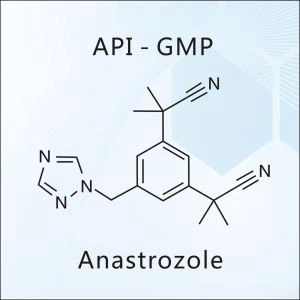
Anastrozole is an aromatase inhibitor used in the treatment of breast cancer. It works by reducing the production of estrogen, which can stimulate the growth of breast cancer cells. While it is not directly related to Afatinib in terms of mechanism of action, it represents another example of a targeted therapy used in early - stage cancer.
Conclusion
In conclusion, the use of Afatinib in early - stage cancer shows promise but is still in the early stages of research. There is some evidence to suggest that it could be an effective adjuvant therapy for patients with early - stage EGFR - mutated NSCLC. However, more large - scale clinical trials are needed to confirm its efficacy and safety.
As a supplier of Afatinib, I am committed to supporting further research in this area. We believe that with continued scientific exploration, Afatinib may play an important role in the treatment of early - stage cancer in the future.
If you are interested in learning more about Afatinib or are considering it for your cancer treatment needs, I encourage you to contact us for a detailed discussion. Our team of experts can provide you with the latest information on Afatinib and help you make an informed decision.
References
- Soria JC, Ohe Y, Vansteenkiste J, et al. Afatinib versus cisplatin plus gemcitabine in patients with advanced lung adenocarcinoma with EGFR mutations. N Engl J Med. 2013;369(19):1879 - 1889.
- Herbst RS, Baas P, Kim DW, et al. Afatinib versus erlotinib as second - line treatment of patients with advanced squamous cell carcinoma of the lung (LUX - Lung 8): an open - label randomised controlled trial. Lancet Oncol. 2015;16(3):298 - 309.
- Wu YL, Zhou C, Hu CP, et al. Afatinib versus gefitinib as first - line treatment of patients with EGFR mutation - positive non - small - cell lung cancer (LUX - Lung 7): a phase 2B, open - label, randomised controlled trial. Lancet Oncol. 2017;18(1):34 - 45.