

Yo, what's up everyone! I'm a supplier of chemical 538 - 75 - 0, and today I wanna chat about the elasticity of this chemical. Elasticity in the chemical world is a big deal, as it tells us how the demand for a chemical changes when there are changes in price, availability of substitutes, and a bunch of other factors.
First off, let's talk about price elasticity of demand. Price elasticity measures how sensitive the quantity demanded of a chemical is to a change in its price. For chemical 538 - 75 - 0, if the price goes up a little bit and the quantity demanded drops significantly, then it's considered to have elastic demand. On the flip side, if the quantity demanded doesn't change much even when the price increases, it has inelastic demand.

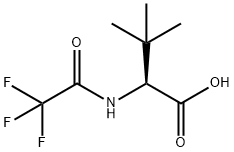
In the case of our chemical 538 - 75 - 0, its price elasticity depends on a few things. One major factor is the availability of substitutes. If there are plenty of other chemicals that can do the same job as 538 - 75 - 0, then customers are more likely to switch to those substitutes when the price of 538 - 75 - 0 goes up. For example, if N,N' Dicyclohexylcarbodiimide DCC can be used in similar applications as 538 - 75 - 0, and it's priced more competitively, customers might choose DCC over our chemical. This means that the demand for 538 - 75 - 0 would be more elastic.
Another factor is the importance of 538 - 75 - 0 in the production process. If it's a crucial ingredient and there are no good alternatives, then the demand is likely to be inelastic. Manufacturers will be willing to pay a higher price for it because they need it to keep their production running. For instance, if 538 - 75 - 0 is used in a unique manufacturing process for a high - value product, and there's no other chemical that can replace it, companies won't reduce their demand much even if the price goes up.
Now, let's consider the income elasticity of demand. Income elasticity shows how the demand for a chemical changes when the income of the customers changes. If 538 - 75 - 0 is used in industries that are highly sensitive to economic cycles, like the luxury goods industry, its demand might increase when the economy is booming and people have more money to spend. In this case, it would have a positive income elasticity.
On the other hand, if 538 - 75 - 0 is used in basic industries that are less affected by economic fluctuations, such as the production of essential household items, its demand might be relatively stable regardless of changes in income. So, its income elasticity would be close to zero.
Cross - price elasticity is also important. It measures how the demand for 538 - 75 - 0 changes when the price of another related chemical changes. For example, if 3 - Methyl - N-(Trifluoroacetyl)-L - Valine is a complementary chemical to 538 - 75 - 0 (meaning they are used together in a process), and the price of 3 - Methyl - N-(Trifluoroacetyl)-L - Valine goes down, the demand for 538 - 75 - 0 might increase. This indicates a negative cross - price elasticity.
Conversely, if Iodotrimethylsilane is a substitute for 538 - 75 - 0, and the price of Iodotrimethylsilane decreases, the demand for 538 - 75 - 0 will likely fall, showing a positive cross - price elasticity.
From a supplier's perspective, understanding the elasticity of chemical 538 - 75 - 0 is super important. It helps us make better decisions about pricing. If the demand is elastic, a small decrease in price could lead to a large increase in the quantity demanded, which might increase our total revenue. On the other hand, if the demand is inelastic, we might be able to increase the price without losing too many customers, thus increasing our profit margins.
We also need to keep an eye on the market trends and the availability of substitutes. If new substitutes enter the market, we might need to adjust our pricing strategy to stay competitive. For example, if a new chemical with similar properties to 538 - 75 - 0 is developed and priced lower, we might have to lower our price or find ways to differentiate our product, like offering better quality or additional services.
In addition, we can use the knowledge of elasticity to forecast future demand. By analyzing how factors like price, income, and the prices of related chemicals affect the demand for 538 - 75 - 0, we can make more accurate predictions about how much of the chemical we'll need to produce and stock.
To sum it up, the elasticity of chemical 538 - 75 - 0 is influenced by multiple factors, including the availability of substitutes, its importance in the production process, and the economic conditions of the industries it serves. As a supplier, I'm constantly monitoring these factors to make sure we can meet the market demand and stay profitable.
If you're in the market for chemical 538 - 75 - 0, I'd love to have a chat with you. Whether you have questions about its properties, pricing, or just want to discuss your specific needs, don't hesitate to reach out. We're committed to providing high - quality products and excellent service.
References
- Microeconomics textbooks on demand elasticity concepts
- Industry reports on chemical market trends and substitute availability