

As a reliable supplier of the chemical with the CAS number 538 - 75 - 0, I am often asked various questions about this compound. One of the most common inquiries is regarding its viscosity. In this blog post, I will delve into the concept of viscosity as it pertains to the chemical 538 - 75 - 0, exploring what viscosity means, how it is measured, and the factors that can influence the viscosity of this particular chemical.
Understanding Viscosity
Viscosity is a fundamental physical property of fluids that describes their resistance to flow. In simpler terms, it is a measure of how "thick" or "thin" a fluid is. For example, honey has a high viscosity because it flows slowly, while water has a low viscosity and flows easily. Viscosity is influenced by several factors, including temperature, pressure, and the molecular structure of the fluid.
The SI unit of viscosity is the pascal - second (Pa·s), but in practical applications, centipoise (cP) is more commonly used. One pascal - second is equal to 1000 centipoise. Different substances have different viscosities, which can have significant implications for their handling, processing, and performance in various applications.
Viscosity of the Chemical 538 - 75 - 0
The chemical with the CAS number 538 - 75 - 0 is a specific compound with its own unique set of physical and chemical properties, including viscosity. The viscosity of this chemical can vary depending on a number of factors.
Temperature
Temperature has a profound effect on the viscosity of most fluids, including the chemical 538 - 75 - 0. Generally, as the temperature increases, the viscosity of a fluid decreases. This is because higher temperatures provide more energy to the molecules, allowing them to move more freely and reducing the internal friction within the fluid. Conversely, as the temperature decreases, the molecules have less energy, move more slowly, and the fluid becomes more viscous.
For the chemical 538 - 75 - 0, it is essential to consider the temperature at which the viscosity is measured. If the chemical is used in a process that operates at high temperatures, its viscosity will be lower than at room temperature. On the other hand, if it is stored or transported in cold conditions, its viscosity will increase, which may affect its flowability and handling.
Pressure
Pressure can also influence the viscosity of the chemical 538 - 75 - 0. In most cases, an increase in pressure leads to an increase in viscosity. This is because higher pressure compresses the molecules closer together, increasing the intermolecular forces and making it more difficult for the molecules to move past one another. However, the effect of pressure on viscosity is often less significant than the effect of temperature, especially for liquids.
Molecular Structure
The molecular structure of the chemical 538 - 75 - 0 plays a crucial role in determining its viscosity. Molecules with long chains or complex structures tend to have higher viscosities because they can become entangled with one another, creating more resistance to flow. In contrast, molecules with simple and compact structures usually have lower viscosities.
Measuring the Viscosity of 538 - 75 - 0
There are several methods available for measuring the viscosity of a fluid, and the choice of method depends on the nature of the fluid and the accuracy required.
Capillary Viscometers
Capillary viscometers work on the principle of measuring the time it takes for a fluid to flow through a capillary tube under the influence of gravity. The viscosity is then calculated based on the dimensions of the tube, the density of the fluid, and the flow time. This method is relatively simple and is often used for measuring the viscosity of Newtonian fluids, which have a constant viscosity regardless of the shear rate.

Rotational Viscometers
Rotational viscometers measure the torque required to rotate a spindle or bob in a fluid. The viscosity is determined by the relationship between the torque and the rotational speed. This method is suitable for measuring the viscosity of both Newtonian and non - Newtonian fluids, which have a viscosity that changes with the shear rate.
Falling - Ball Viscometers
Falling - ball viscometers measure the time it takes for a ball to fall through a fluid under the influence of gravity. The viscosity is calculated based on the density of the ball and the fluid, the diameter of the ball, and the falling time. This method is commonly used for measuring the viscosity of highly viscous fluids.
Applications and the Importance of Viscosity
The viscosity of the chemical 538 - 75 - 0 is an important factor in its various applications.
Industrial Processes
In industrial processes, the viscosity of the chemical can affect its mixing, pumping, and coating properties. For example, if the chemical is used as a lubricant, its viscosity must be carefully controlled to ensure proper lubrication and reduce friction between moving parts. If the viscosity is too low, the lubricant may not provide sufficient protection, while if it is too high, it may cause excessive energy consumption and heat generation.
Pharmaceutical and Cosmetic Industries
In the pharmaceutical and cosmetic industries, the viscosity of the chemical can influence its formulation and application. For instance, in the production of creams and lotions, the viscosity affects the texture and spreadability of the product. A product with the right viscosity will be easy to apply and will provide a smooth and even coverage.
Related Chemicals and Their Viscosity
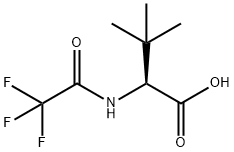
There are several related chemicals that are also important in the chemical industry. For example, Iodotrimethylsilane is a useful intermediate in organic synthesis. Its viscosity, like that of 538 - 75 - 0, is also affected by temperature, pressure, and molecular structure. Another related chemical is 3 - Methyl - N - (Trifluoroacetyl) - L - Valine, which is used in the production of pharmaceuticals. The viscosity of this chemical can impact its solubility and reactivity in different solvents. N,N' Dicyclohexylcarbodiimide DCC is a common coupling agent in peptide synthesis, and its viscosity can affect the efficiency of the coupling reaction.
Conclusion
In conclusion, the viscosity of the chemical 538 - 75 - 0 is a complex property that is influenced by temperature, pressure, and molecular structure. Understanding the viscosity of this chemical is crucial for its proper handling, processing, and application in various industries. By carefully controlling the viscosity, we can ensure the optimal performance of the chemical in different processes and products.
If you are interested in purchasing the chemical 538 - 75 - 0 or have any questions about its viscosity or other properties, please feel free to contact us for further discussion and negotiation. We are committed to providing high - quality products and excellent customer service.
References
- ASTM International. (20XX). Standard Test Methods for Viscosity.
- Bird, R. B., Stewart, W. E., & Lightfoot, E. N. (20XX). Transport Phenomena.
- Lide, D. R. (Ed.). (20XX). CRC Handbook of Chemistry and Physics.