

Hey there! As a supplier of Iohexol, I often get asked a bunch of questions about this stuff, especially whether it's a contrast agent for myelography. So, let's dive right in and break it down.
First off, what's myelography? Well, it's a medical imaging procedure. Doctors use it to take a close - up look at the spinal cord, nerve roots, and the surrounding tissues. They inject a contrast agent into the subarachnoid space around the spinal cord. This contrast agent makes these structures show up better on X - rays, CT scans, or other imaging tests.

Now, let's talk about Iohexol. Iohexol is a non - ionic, water - soluble contrast medium. It's been around for a while and is widely used in different types of medical imaging. It has some really cool properties. For one, it has a relatively low osmolality compared to some other contrast agents. This means it causes less irritation to the tissues when it's injected.
When it comes to myelography, Iohexol can indeed be used as a contrast agent. Its chemical properties allow it to spread evenly in the cerebrospinal fluid (CSF) around the spinal cord. This even distribution helps doctors get clear and detailed images of the spinal structures. You see, the clear images are super important. They can help diagnose all sorts of issues like herniated discs, spinal tumors, and nerve root compressions.
Let me give you a bit of the science behind it. Iohexol contains iodine atoms. Iodine is great at absorbing X - rays. When Iohexol is injected into the CSF, the iodine in it absorbs the X - rays, creating a contrast between the spinal structures and the surrounding areas. This makes it easier for doctors to spot any abnormalities.
But, like any medical product, there are some things to keep in mind. Before using Iohexol for myelography, doctors need to consider a patient's medical history. Some people might be allergic to iodine or have other health conditions that could make the use of Iohexol risky. For example, patients with severe kidney problems might have a harder time clearing the contrast agent from their bodies. So, a proper pre - injection assessment is crucial.
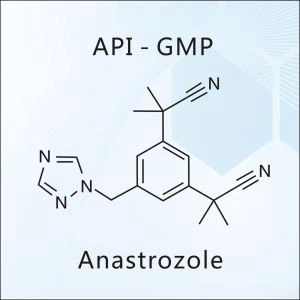
Now, compared to other contrast agents out there, Iohexol has its pros and cons. Take Anastrozole for instance. Anastrozole is mainly used in the treatment of breast cancer and has nothing to do with contrast agents for myelography. But it shows that different drugs have different purposes.
Iodixanol is another contrast agent. It's also non - ionic and has a low osmolality, just like Iohexol. However, the choice between Iohexol and Iodixanol might depend on factors like cost, availability, and the specific imaging requirements of the patient. Some studies suggest that Iodixanol might have a slightly lower risk of certain side effects, but Iohexol is still a very reliable option.
Atorvastatin Calcium is used to lower cholesterol levels. It's completely off - topic when it comes to myelography contrast agents, but it just goes to show how diverse the pharmaceutical world is.
In terms of side effects, Iohexol for myelography can sometimes cause some mild issues. Patients might experience headaches, nausea, or a bit of dizziness after the injection. These symptoms usually go away on their own within a day or two. In rare cases, more serious side effects like seizures or allergic reactions can occur, but this is really uncommon.
As a supplier of Iohexol, I know how important it is to provide a high - quality product. We work hard to ensure that our Iohexol meets all the strict quality standards. It's produced in a state - of - the - art facility, and we conduct multiple quality checks at every stage of the manufacturing process.
If you're in the medical field and are thinking about using Iohexol for myelography, I'd love to have a chat with you. Whether you're a hospital, a clinic, or a research institution, we can provide you with the right amount of Iohexol at a competitive price. Our team is always ready to answer any questions you might have about the product, its usage, or storage.
If you're interested in learning more about Iohexol or are looking to make a purchase, don't hesitate to reach out. We can discuss the best options for your specific needs. Whether it's a small - scale order for a local clinic or a large - scale supply for a big hospital, we've got you covered.
In conclusion, Iohexol is a viable contrast agent for myelography. It has its advantages in terms of its imaging capabilities and relatively low side - effect profile. With proper patient assessment and handling, it can be a valuable tool in diagnosing spinal conditions. So, if you're in the market for a reliable contrast agent for myelography, give Iohexol a thought. And remember, we're here to support you every step of the way.
References
- Bülow, J., Søndergaard, L., & Henriksen, O. (1985). Iohexol in myelography. Neuroradiology, 27(3), 209 - 213.
- Runge, V. M., & Adler, R. S. (1994). Safety of nonionic iodinated contrast media. Investigative radiology, 29(Suppl 2), S98 - S102.